Share the page
How Proparco helped KCB embed climate into core banking decisions
Published on
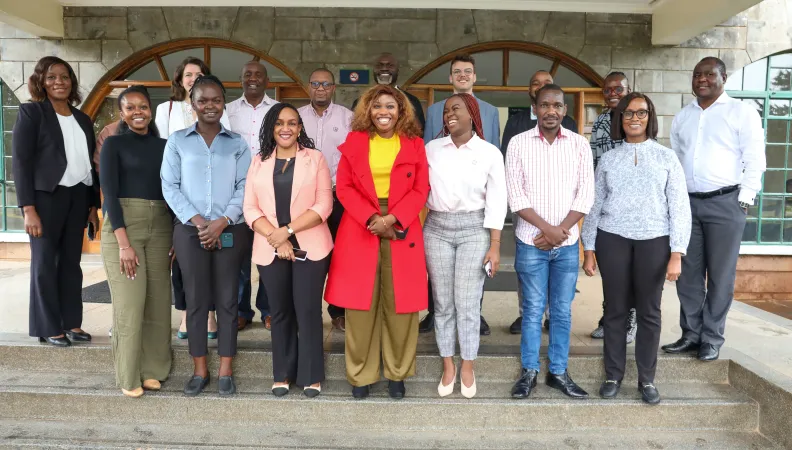
For banks, climate change is increasingly a question of risk management, regulatory readiness and business opportunity. Through a technical assistance programme, Proparco has supported KCB, the largest bank in East Africa by market share. This support has helped the bank integrate climate considerations more systematically into everyday banking decisions, including risk assessment, due diligence, reporting and green product development.
Bringing together technical analysis, practical tools and capacity building, the programme is helping strengthen KCB’s ability to manage climate-related risks and identify new opportunities for climate-aligned finance.
East Africa’s largest bank had already made its ambitions clear. With a green portfolio exceeding KES 53 billion (approximately US$ 410 million) and a target to reach 25 per cent of its total loan book, KCB had set a bold course for climate-aligned finance, aiming to scale mitigation and adaptation finance and become a regional leader in this area. The question was not whether to act, but how to build the internal systems to do so consistently and at scale.
In 2024, Proparco commissioned Adelphi, a leading international consultancy for sustainable finance, to deliver a two-year technical assistance programme to translate KCB’s climate commitments operational practice across risk management, due diligence, reporting, and green product development. Judith Sidi Odhiambo, Head of Sustainability and Impact at KCB, explains why strengthening climate integration matters to the bank.
Judith Sidi Odhiambo is Head of Sustainability and Impact at KCB and plays a key role in advancing the bank’s sustainability agenda, integrating climate considerations into banking operations and expanding opportunities for green finance.

Why was it important for KCB to strengthen how climate considerations are integrated into core banking decisions?
Climate change presents both financial risks and new business opportunities. Strengthening climate integration enables KCB to enhance risk management, improve regulatory readiness, and better support customers as they transition to more sustainable business models. Embedding climate considerations into core banking decisions also strengthens the Bank's resilience while positioning it to expand sustainable finance solutions that contribute to Kenya's climate and development goals.
Where do you see the greatest potential for this work to influence how KCB manages risk and identifies climate finance opportunities?
The programme has strengthened KCB's ability to assess climate-related risks through improved due diligence, enhanced reporting, and climate stress testing. It has also created a strong foundation for identifying climate finance opportunities, particularly through the development of green products and the Bank's ongoing initiatives to support MSMEs and clients investing in climate-smart and resilient solutions.
What did the technical assistance programme involve in practice?
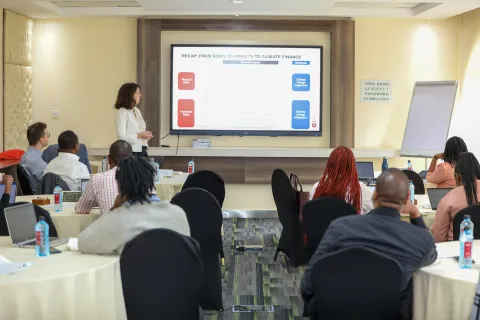
The programme began with a diagnostic of KCB’s climate maturity, which helped identify priorities across due diligence, data, internal processes and staff capabilities. From there, adelphi developed practical tools for climate risk assessment, stress testing and due diligence, while also helping KCB identify green lending opportunities. A second phase focused on developing two green financial products, as well as hands-on training and workshops, reaching 70 staff across 12 sessions.
What capabilities did the programme help build within KCB teams, and why are these important for integrating climate into everyday banking practice?
The programme enhanced staff knowledge of climate risks and opportunities while equipping teams with practical tools for climate due diligence, risk assessment, reporting, and product development. These capabilities enable climate considerations to be embedded into routine banking processes, improving decision-making, strengthening governance, and supporting the Bank's long-term sustainability strategy.
What was the greatest value of the technical assistance for KCB teams?
The combination of high-quality technical expertise, practical tools, and targeted capacity building. The programme strengthened internal knowledge, improved climate reporting processes, and introduced resources that are now being integrated into KCB's strategy and operations. It also empowered teams to better identify, assess, and manage climate-related risks and opportunities across the Bank.

Key takeaways
- Climate-related risks are already a material consideration for KCB's loan portfolio, with physical and transition risks mapped at portfolio level.
- An automated due diligence tool now enables loan officers to generate a climate risk profile, identify adaptation and mitigation measures, and check eligibility against three taxonomies in a single workflow.
- Seventy staff trained across two phases; approximately half women.
About Kenya Commercial Bank (KCB)
Established in 1896, KCB is the largest bank in East Africa by market share. Operating across Kenya, Rwanda, Uganda, Tanzania, Burundi, South Sudan, and the Democratic Republic of Congo, the Group has built one of the largest branch networks in the region. In 2024, the bank disbursed KES 53.2 billion (approximately US$ 410 million) in green loans, raising its green portfolio from 15 per cent to over 21 per cent of its total loan book. Its target: to sustain a green lending volume of KES 50 billion annually.
Read more
Türkiye: Proparco and FMO support the development of Armada Gıda’s agri-food capabilities
Published on October 19, 2026
IDB Invest and Proparco Strengthen Partnership to Mobilize Private Investment in Latin America and the Caribbe...
Published on October 16, 2026
"A Close and Innovative Relationship with BOAD"
Published on October 15, 2026